
Big Game
2026
The 129th Big Game kicks off in…
Your independent guide to the best live sports in the San Francisco area! This website is operated by a ticket broker.
Ticket prices are set by third-party sellers and may be above or below face value.
We are not affiliated with nor endorsed by the Big Game.
Big Game 2026: A New Chapter for the West's Oldest Rivalry
The 129th Big Game arrives on Saturday, November 21, 2026, with historic circumstances: both the California Golden Bears and Stanford Cardinal will field teams under first-year head coaches. When Cal hosts Stanford at California Memorial Stadium in Berkeley, Tosh Lupoi's Bears will battle Tavita Pritchard's Cardinal for the legendary Stanford Axe—the trophy that has defined Bay Area college football since 1933.
This marks the first time both programs have entered the Big Game with new coaches since 1977. The coaching transition reflects a modernized approach at both universities, with NFL-style general managers now overseeing football operations: Andrew Luck at Stanford and Ron Rivera at Cal. Both former players have returned to transform their alma maters.
Stanford Reclaims the Axe in 2025
The 128th Big Game on November 22, 2025, ended Cal's four-year grip on the Stanford Axe. Stanford dominated 31-10 at Stanford Stadium, scoring two defensive touchdowns on fumble returns to spark a dominant performance. Safety Jay Green and Darrius Davis each returned fumbles for touchdowns as the Cardinal defense set the tone against a Cal team plagued by 13 penalties and three turnovers.
Interim coach Frank Reich led Stanford to the victory in his only Big Game appearance before Tavita Pritchard was hired three days later. Running back Micah Ford rushed for 150 yards, and quarterback Elijah Brown hit CJ Williams for a 34-yard touchdown that sealed the win. For Cal, the loss led to GM Ron Rivera firing Justin Wilcox after nine seasons—the Big Game result serving as the final straw. Stanford now leads the all-time series 66-51-11.
Tavita Pritchard Returns to The Farm
Stanford's hiring of Tavita Pritchard represents a homecoming for the former Cardinal quarterback who engineered one of college football's greatest upsets—leading 41-point underdog Stanford to a 24-23 victory over No. 2 USC in 2007. Pritchard played at Stanford from 2006-09, served on staff under Jim Harbaugh and David Shaw, then excelled as NFL Washington Commanders quarterbacks coach, helping Jayden Daniels win 2024 AP Offensive Rookie of the Year.
GM Andrew Luck, Pritchard's former teammate, has secured over $100 million in donations for Stanford football, including a transformative $50 million gift from Bradford M. Freeman. The Cardinal enters 2026 with momentum and resources to rebuild after four consecutive 3-9 seasons from 2021-24. Follow their progress at GoStanford.com and @StanfordFball.
Tosh Lupoi Comes Home to Berkeley
Cal hired Tosh Lupoi in December 2025, bringing the former Bears defensive lineman (2000-05) and longtime coach back to his alma mater. Lupoi arrives from Oregon, where he served as defensive coordinator for Dan Lanning's playoff-contending Ducks. His resume includes two national championships on Nick Saban's Alabama staff and three years of NFL coaching experience.
Lupoi's first major accomplishment: convincing star freshman quarterback Jaron-Keawe Sagapolutele to remain at Cal. JKS became the first FBS freshman to throw for 200+ yards in his first 12 career games and represents the Bears' brightest offensive prospect in years. With GM Ron Rivera providing NFL-level infrastructure, Cal aims to compete consistently in the ACC. Track developments at CalBears.com and @CalFootball.
Securing Big Game 2026 Tickets
With both programs under new leadership and the Axe changing hands in 2025, demand for Big Game 2026 tickets should be exceptional. Our trusted resale marketplace connects fans with verified sellers offering authentic tickets to this historic rivalry, complete with buyer protection on every purchase. Over 20 years in business and top ratings on Trustpilot ensure a secure purchasing experience.
California Memorial Stadium holds approximately 63,000 fans, and the Big Game traditionally approaches sellout status. Whether you're cheering "Roll On You Bears!" or performing the Stanford Axe Yell, browse our inventory now to find tickets matching your seating preferences and budget.
The Stanford Axe: College Football's Most Storied Trophy
No college football trophy has a more colorful history than the Stanford Axe. First brandished by Stanford yell leader Billy Erb in 1899 at a baseball game, the Axe was stolen by Cal students just days later, sparking decades of theft, conspiracy, and elaborate heists. The Axe remained at Berkeley until 1930, when a group of Stanford students—forever known as the "Immortal 21"—executed an audacious recovery mission involving fake photographers, smoke bombs, and a multi-car getaway.
In 1933, both universities agreed to make the Axe the official Big Game trophy, awarded annually to the victor. The Axe's handle records the score of every Big Game since, with one notable exception: when Stanford possesses the trophy, they change the 1982 score from "California 25-20" to "Stanford 20-19"—a pointed commentary on the most controversial finish in rivalry history.
"The Play" and Big Game Lore
The 1982 Big Game produced what many consider the most famous play in college football history. With seconds remaining and Stanford leading 20-19, Cal's kickoff return featured five rugby-style laterals as the Stanford Band prematurely rushed the field. Cal's Kevin Moen weaved through band members—famously running over trombonist Gary Tyrrell—to score the winning touchdown. Joe Starkey's radio call lives in sports broadcasting immortality: "Oh, the band is out on the field! ... He's gonna go into the end zone!" Stanford disputes the play's legality to this day, but the official result stands.
The GM Era: Luck and Rivera Transform Bay Area Football
The 2025-26 coaching carousel brought unprecedented changes to both programs. Stanford's Andrew Luck—the No. 1 overall pick in the 2012 NFL Draft and four-time Pro Bowler—returned to campus in November 2024 as the first-ever football general manager at the university. His mandate: modernize Stanford football while maintaining the program's academic standards.
Cal followed suit by hiring Ron Rivera, the former Carolina Panthers and Washington Commanders head coach, as their GM in March 2025. Rivera, a Cal linebacker (1980-83) and 1983 Pac-10 Defensive Player of the Year, commands an $800,000 salary to oversee all football operations. His first major decision—firing Justin Wilcox after the 2025 Big Game loss—signaled Cal's heightened expectations.
Both former players now chart their alma maters' futures, making Big Game 2026 a referendum on their visions.
Big Game 2026 Quick Facts
- Date: Saturday, November 21, 2026
- Venue: California Memorial Stadium, Berkeley, CA
- Capacity: Approximately 63,000
- Series Record: Stanford leads 66-51-11
- Axe Holder: Stanford (reclaimed November 2025)
- Stanford HC: Tavita Pritchard (1st season)
- Cal HC: Tosh Lupoi (1st season)
- Stanford GM: Andrew Luck
- Cal GM: Ron Rivera
- TV: TBA (typically ACC Network or ESPN)
- Official Sites: GoStanford.com | CalBears.com
Big Game Venues: Memorial Stadium in 2026
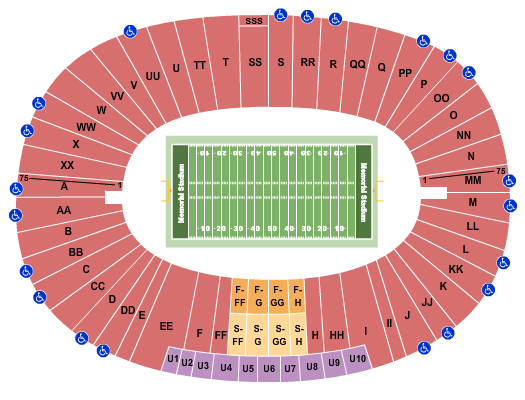
Following the traditional rotation, the 129th Big Game will be played at California Memorial Stadium in Berkeley. Opened in 1923 as a memorial to Californians who served in World War I, this historic venue seats approximately 63,000 fans in one of college football's most scenic settings. The stadium's position at the foot of the Berkeley Hills provides panoramic views of San Francisco Bay.
Memorial Stadium underwent a $321 million renovation completed in 2012, updating the venue with modern amenities while preserving its neoclassical architecture. The stadium is listed on the U.S. National Register of Historic Places. Above the eastern rim, Tightwad Hill offers free views for fans watching from outside—a unique Berkeley tradition dating back decades.
Big Game Week Traditions
The Big Game isn't just a football game—it's a week-long celebration of school spirit:
Cal Traditions
Big Game Week at Berkeley includes the famous Big Game Bonfire Rally at Hearst Greek Theatre, where thousands of students gather on the eve of the game. The UC Rally Committee organizes cable car rallies in San Francisco and the ceremonial countdown. Cal students perform the Haka, a traditional Maori war dance adopted in the 1960s. The cry of "Roll On You Bears!" echoes across campus throughout the week.
Stanford Traditions
At Stanford, the Stanford Axe Committee leads celebrations including the train whistle countdown—blowing a whistle every hour for the 129 hours leading to kickoff. The "Bearial"—a mock funeral procession featuring a stuffed bear in a casket—proceeds through campus. Gaieties, a student-written musical dating to 1911, celebrates and satirizes the rivalry.
All-Time Greats of the Big Game
The rivalry has featured legendary players who became NFL stars. Stanford's roster of greats includes John Elway, Jim Plunkett, Andrew Luck, Christian McCaffrey, and Toby Gerhart. Cal counters with Aaron Rodgers, Tony Gonzalez, Marshawn Lynch, DeSean Jackson, and Jared Goff. Combined, the programs have placed 36 players in the College Football Hall of Fame.
Memorable Big Game Moments
- 1982 "The Play": Cal's five-lateral kickoff return through the Stanford Band; Joe Starkey's call immortalized
- 1990: Stanford scores twice in final 12 seconds for 27-25 upset
- 2007: Tavita Pritchard leads 41-point underdog Stanford to 24-23 upset of No. 2 USC
- 2010-2018: Stanford wins nine consecutive Big Games
- 2019: Cal ends Stanford's streak with fourth-quarter touchdown, 24-20
- 2021: Cal's 636 total yards sets Big Game record in 41-11 blowout
- 2025: Stanford reclaims Axe with 31-10 win; two defensive touchdowns spark victory
Frequently Asked Questions: Big Game 2026
When is the Big Game 2026?
The Big Game 2026 is scheduled for Saturday, November 21, 2026. This will be the 129th meeting between Cal and Stanford. The exact kickoff time and television network will be announced closer to the game date once the ACC finalizes its broadcast schedule.
Where will the Big Game 2026 be played?
The Big Game 2026 will be played at California Memorial Stadium in Berkeley. Following the traditional alternating pattern, Cal hosts in even-numbered years. Stanford hosted the 2025 game and will host again in 2027. Memorial Stadium holds approximately 63,000 fans.
Who are the new head coaches for Big Game 2026?
Both teams will have first-year head coaches. Tavita Pritchard leads Stanford after being hired by GM Andrew Luck in November 2025. He was previously the Washington Commanders quarterbacks coach. Tosh Lupoi leads Cal after being hired by GM Ron Rivera in December 2025. He was Oregon's defensive coordinator.
Who leads the all-time Big Game series?
Stanford leads the all-time series 66-51-11 following their 31-10 victory in November 2025. The series includes 11 ties from before the NCAA instituted overtime. Stanford reclaimed the Axe in 2025 after Cal had won four consecutive Big Games from 2021-2024.
What is the Stanford Axe?
The Stanford Axe is the trophy awarded to the winner of the Big Game. First introduced by a Stanford yell leader in 1899, it was stolen by Cal students two days later and remained at Berkeley until 1930. In 1933, both schools agreed to make it the official Big Game trophy. The winner's name and score are engraved on the Axe handle after each game.
What was "The Play" in the 1982 Big Game?
"The Play" refers to the final kickoff return of the 1982 Big Game, considered one of college football's most famous plays. With Stanford leading 20-19 and seconds remaining, Cal's kickoff return featured five laterals and ended with Kevin Moen running through the Stanford Band (which had prematurely taken the field) for the winning touchdown. Stanford disputes the play's legality but the official result stands.
Who are Andrew Luck and Ron Rivera?
Andrew Luck is Stanford's football general manager, hired in November 2024. The former No. 1 NFL Draft pick and Stanford quarterback (2009-11) oversees all football operations. Ron Rivera is Cal's football general manager, hired in March 2025. The former NFL head coach and Cal linebacker (1980-83) holds similar responsibilities for the Bears.
How can I buy Big Game 2026 tickets?
You can purchase Big Game 2026 tickets through our secure resale marketplace at BigStub.com. We connect fans with verified sellers offering authentic tickets at competitive, all-inclusive prices. Every purchase is backed by buyer protection and verified seller authentication.
What happened in the 2025 Big Game?
Stanford defeated Cal 31-10 at Stanford Stadium on November 22, 2025, reclaiming the Axe for the first time since 2020. The Cardinal scored two defensive touchdowns on fumble returns by Jay Green and Darrius Davis. Cal committed 13 penalties and three turnovers. The loss led to Cal firing coach Justin Wilcox the following day.
Will Jaron-Keawe Sagapolutele play for Cal in 2026?
Yes, star freshman quarterback Jaron-Keawe Sagapolutele has confirmed he will remain at Cal for the 2026 season. He announced his decision via social media after meeting with new coach Tosh Lupoi in Hawaii. JKS became the first FBS freshman to throw for 200+ yards in his first 12 career games.
What is Tightwad Hill?
Tightwad Hill is a hillside overlooking the eastern end of California Memorial Stadium where fans can watch Big Game and other Cal football games for free. Located about 100 feet above the stadium, it offers a unique viewing experience and has been a Berkeley tradition for decades.
Can I tailgate at the Big Game?
Yes, tailgating is a cherished Big Game tradition at both venues. Berkeley's areas around Memorial Stadium fill with blue and gold on game day. Check official Cal Athletics website for current tailgating policies and permitted locations.
How do I get to Memorial Stadium?
BART's Downtown Berkeley station is about a 15-minute walk to Memorial Stadium. The stadium is located on the UC Berkeley campus at the base of the Berkeley Hills. Parking is extremely limited on campus, so public transit is strongly encouraged.
What Big Game traditions should I know about?
Key traditions include the Stanford Axe trophy presentation, Cal's Big Game Bonfire Rally at Hearst Greek Theatre, Stanford's train whistle countdown and Bearial ceremony, the Axe Yell ("Give 'em the Axe!"), Cal's performance of the Haka, and the Gaieties musical at Stanford.
What should I wear to the Big Game?
Fans traditionally wear their school colors—blue and gold for Cal, cardinal red for Stanford. Both fan bases take color coordination seriously, creating striking visual displays in their respective stadium sections. November weather in the Bay Area can be cool, so layering is recommended.
Experience the Bay Area's Ultimate Rivalry
The 129th Big Game promises to be one of the most intriguing meetings in recent rivalry history. With Tavita Pritchard bringing Andrew Luck's vision to Stanford and Tosh Lupoi implementing Ron Rivera's blueprint at Cal, both programs enter a new era with championship aspirations. The Axe—currently residing at Stanford—provides the ultimate prize.
Whether you bleed blue and gold or cardinal red, being present at California Memorial Stadium creates memories that last a lifetime. The drama, the traditions, and the bragging rights at stake make every Big Game special.
Don't miss your chance to be part of Big Game 2026. Browse our selection of verified tickets and secure your spot for Cal versus Stanford at Memorial Stadium. Give 'em the Axe—or take it back. The choice is yours, but experiencing this rivalry in person is something every college football fan deserves.
Memorial Stadium Seating Chart for Big Game
Memorial Stadium Upcoming Events
Follow your to Memorial Stadium
See Big Game live at Memorial Stadium!
- 76 Canyon Road
Berkeley, California 94720